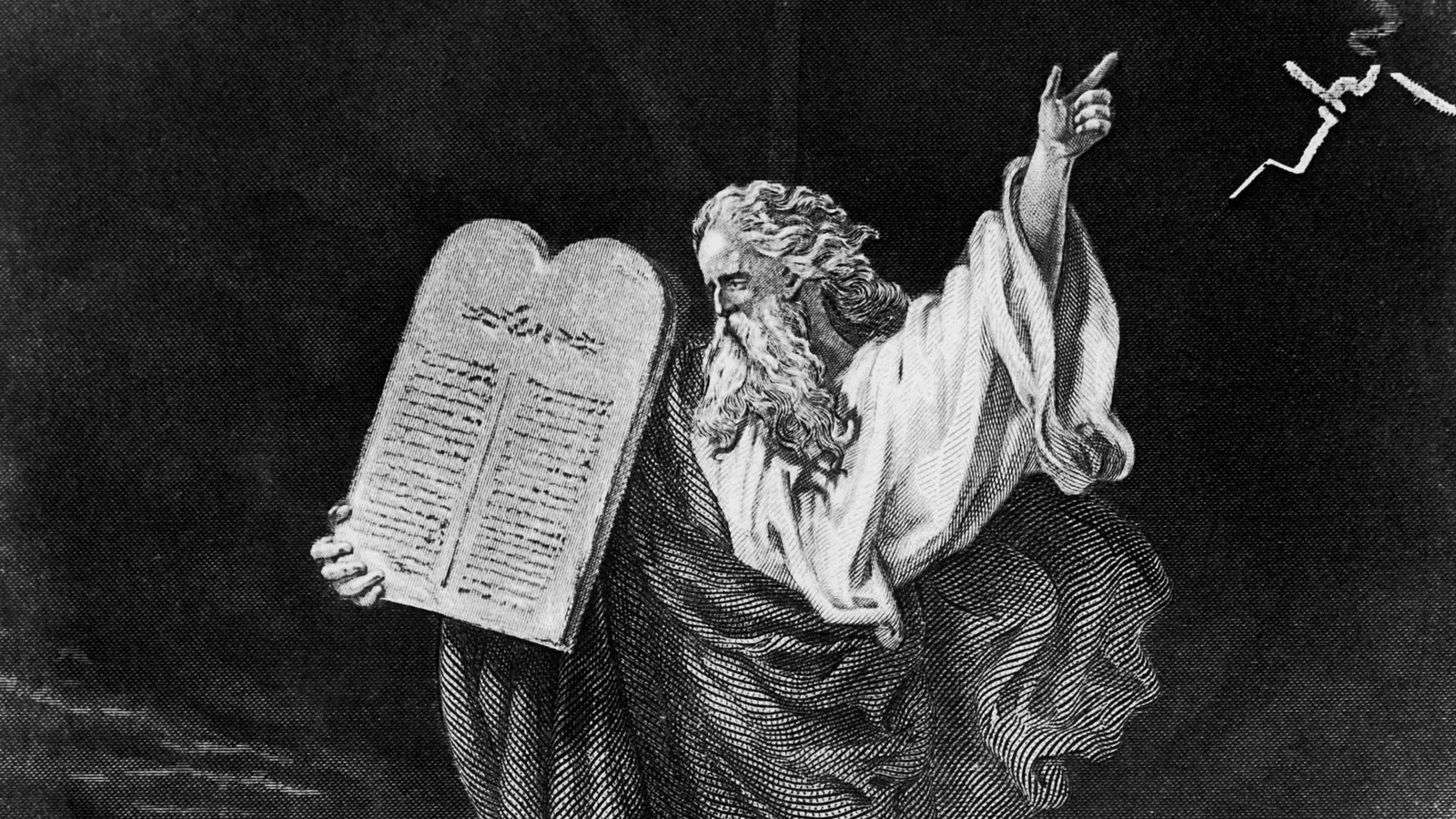
I have noted before that covenant theology is not a particular kind of study for particular kind of people. Yes, there are covenant theologians out there with their covenant theologies and for all of that, we are grateful. Nevertheless, it is my habit to make covenant thinking a layman’s game, the regular old Bereans among us who pay attention to the words of Scripture. The word covenant appears nearly three hundred times in the old testament and over thirty times in the new. And what quickly appears by a survey of Scripture is that when God covenants with man, He does so with different key figures at the helm.
God makes His covenant of grace first with Adam immediately after the fall, then this covenant is reestablished with Noah, Abraham, Moses, David and eventually Christ in the new covenant. With each reestablishment, the covenant of grace takes on more clarity, more color, more specific laws and the like. Now I take every one of these various reestablishments to be the covenant of grace for substance, the covenant in which God swears blessing and eternal life to His people. Thus, none of them are merely temporal, physical, or earthly. They all, of course, contain temporal, physical, and earthly blessings, these kinds of blessings not being stripped from the eternal, spiritual, and heavenly ones.
Historically, there has been a good deal of debate over the Mosaic administration of the covenant of grace. The majority Paedobaptist position has been that the Mosaic Covenant was an administration of the covenant of grace like the Abrahamic and the post-fall Adamic covenant in Genesis 3. But there have been other views, the most popular being John Owen’s take that the Mosaic Covenant was not the covenant of grace but a different covenant entirely, one that served the covenant of grace, but itself was not a covenant in which God swore eternal life to His people. According to Owen no one was ever saved or damned by the Mosaic Covenant. It differed in substance from the covenant of grace, not only in accidents or administration. In short, Owen’s view is that it was sub-salvific.
A third view that has been held at least from the seventeenth century is that the Mosaic Covenant is a sort of republication of the Covenant of Life originally made with prelapsarian Adam. All of the “Do this and live” in the Mosaic Covenant, according to this position, smells of God’s covenant of Life or Works in the Garden of Eden.
So there are three basic views on the Mosaic Covenant: First, it is a republication of the covenant of Life. Second, it is not the covenant of life or the covenant of grace but a sub-salvific covenant, Owen’s view. And third, the position I will contend for, that the Mosaic Covenant is the covenant of grace.
Here are seven reasons that the Mosaic Covenant is the Coveant of Grace, and I’m tracking with John Ball’s A Treatise on the Covenant of Grace here:
First, The Mosaic Covenant was one in which the covenant people were made a kingdom of priest, a holy nation, and a peculiar treasure unto the Lord. The key text is Exodus 19:5-6, where God speaks to Israel just before giving them the Ten Words, saying, “Now therefore, if ye will obey my voice indeed, and keep my covenant, then ye shall be a peculiar treasure unto me above all people: for all the earth is mine: And ye shall be unto me a kingdom of priests, and an holy nation. These are the words which thou shalt speak unto the children of Israel.”
The first thing to note is that the blessings listed here, being a peculiar treasure unto the Lord, a kingdom of priests, and a holy nation, are covenantal blessings. They will come to fruition conditioned upon Israel keeping covenant with God and obeying His Word. These are not random, abstract, or non-covenantal promises that God made to peculiar individuals in the Old Testament.
It follows that, in order to maintain the Mosaic Covenant is sub-salvific, one must claim that these covenantal blessings of the Mosaic Covenant are sub-salvific. Thus, Israel would be a mere physical or temporal treasure unto the Lord. They would be a sub-salvific kingdom of priests, priests who themselves were not reconciled to God savingly. They must be a holy nation, but only in the sense that they bear certain markers that set them apart in an earthly way, not as the bearers of God’s salvation.
Second, in the Mosaic Covenant, God proclaims Himself to be the God of Israel. He does so In Exodus 20 right before delivering the Ten Words to Israel, ” And God spake all these words, saying, I am the Lord thy God, which have brought thee out of the land of Egypt, out of the house of bondage” (Exodus 20:1-2). This is the same promise that He delivered in the Abrahamic Covenant, “I will be God to you and your offspring after you in their generations” (Genesis 17:7). It also brings to mind the great hall of faith in Hebrews 11:16, where we hear that God was not ashamed to be called their God. It would be peculiar to reduce God’s Mosaic Covenant, in which He announces that He is Israel’s God, to a sub-salvific covenant.
Third, the first commandment within the Mosaic Covenant was to worship God alone. The first commandment was not simply “act right” or “keep your nose clean.” The requirement to worship God alone within the Mosaic Covenant indicates that on God’s end, He promises salvation. In the seventeenth century English of John Ball, “Christ our Saviour thus reciteth the first commandment . . . and it can hardly be questioned, whether that Covenant wherin we are bound to take God to be our Father, King and Saviour be the Coveannt of grace or no?”
Fourth, the Mosaic Covenant could be renewed and was so by godly kings and the people of Israel. We hear this provision in Deuteronomy 4:30, ” When thou art in tribulation, and all these things are come upon thee, even in the latter days, if thou turn to the Lord thy God, and shalt be obedient unto his voice; (For the Lord thy God is a merciful God;) he will not forsake thee, neither destroy thee, nor forget the covenant of thy fathers which he sware unto them.” This point particularly addresses the claim that the Mosaic Covenant was the Covenant of Life republished. Forgiveness and covenant renewal were not offered in the Covenant of Life as they are in the Covenant of Grace. It follows that if the Mosaic Covenant is renewed, it cannot be the Covenant of Life.
Fifth, the Mosaic Covenant was the same in substance with the Abrahamic Covenant. We see this as God covenanted to the people both in Abraham and Moses’ day: land, a great name, a holy nation, and the continuance of these promises to their seed. Moreover, faith and obedience were conditions of the covenant in both instances. Such obedience is well attested in the Mosaic, but it is also present in Abraham, “And when Abram was ninety years old and nine, the Lord appeared to Abram, and said unto him, I am the Almighty God; walk before me, and be thou perfect. And I will make my covenant between me and thee, and will multiply thee exceedingly” (Genesis 17:1-2).
Sixth, in the Mosaic Covenant, God vows marriage to Israel. This marriage is evidenced in Jeremiah 2:2, ” Moreover the word of the Lord came to me, saying, Go and cry in the ears of Jerusalem, saying, Thus saith the Lord; I remember thee, the kindness of thy youth, the love of thine espousals, when thou wentest after me in the wilderness, in a land that was not sown.” This marriage between God and His people in the Mosaic Covenant appears also in Ezekiel 16:8, “Now when I passed by thee, and looked upon thee, behold, thy time was the time of love; and I spread my skirt over thee, and covered thy nakedness: yea, I sware unto thee, and entered into a covenant with thee, saith the Lord God, and thou becamest mine.” It is hard to claim that the covenant wherein God takes Israel to be His bride is a sub-salvific covenant. Again in the words of John Ball, “when God gave his law unto Israel upon Mount Sinai, he troth-plighted that people unto himselfe, and him selfe unto them, and that of his mere love, not of any merit in them.”
Seventh, the Mosaic Covenant requires faith. The law indeed came through Moses and grace and truth through Jesus Christ. We are right to mark discontinuities and the betterness of the new covenant. But it is foolish to speak of law as opposed to faith. 1 Timothy 1:5, “Now the end of the commandment is charity out of a pure heart, and of a good conscience, and of faith unfeigned.” The law cannot be kept apart from faith and faith is the instrument of our salvation. This very instrument was required in the Mosaic Covenant.
The blessings of the Mosaic Covenant, along with the conditions required, are very hard to square with a sub-salvific covenant whereby no one was ever saved or damned. It is all the more difficult to square the blessings of the Mosaic Covenant with the notion that it is the Covenant of Life republished. The nature of those blessings demonstrate that the Mosaic Covenant, was indeed an administration of the Covenant of Grace, albeit the old administration, which had plenty of shortcomings.
The claim that the Mosaic Covenant was the Covenant of Grace does raise questions about what Paul means in the book of Galatians, particularly chapters three and four. I hope to write something about that down the line.